July 16, 17 & 18, 2026
Catalysis Summit 2026 In Rome, Italy
4th Global Summit on Catalysis & Chemical Engineering
Theme:
“Unlocking Future Pathways through Catalysis and Chemical Engineering”
Venue: Hotel – NH Roma Villa Carpegna, Rome, Italy

Overview
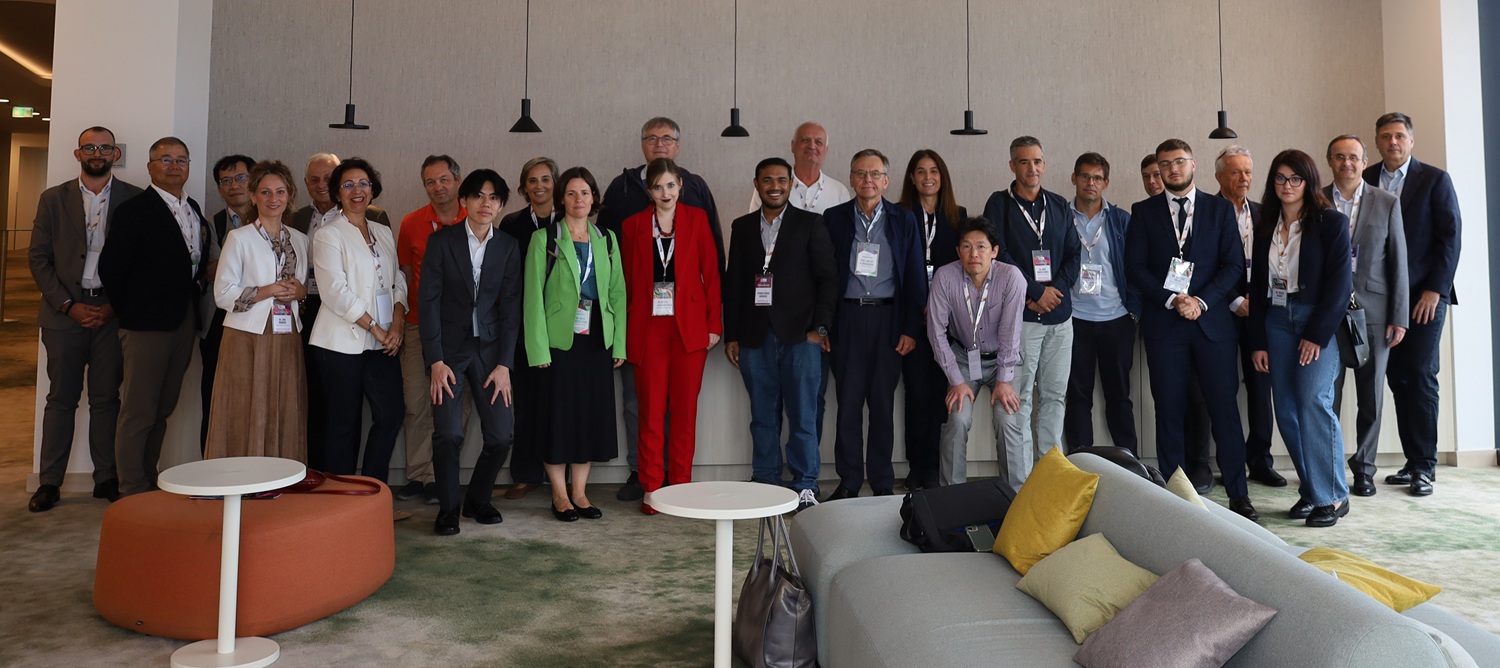
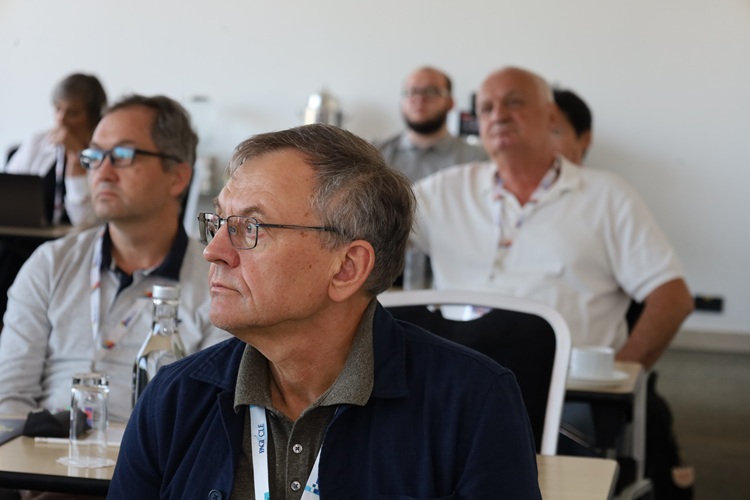
July 16 & 17, 2026 (In-Person)
July 18, 2026 (Virtual)
Catalysis Summit 2026
We are enchanted to welcome you to join the In-Person Conference scheduled on July 16 & 17, 2026 (In-Person at Rome, Italy) & July 18, 2026 (Virtual Via Zoom Platform) which is an incomparable gathering for the worldwide prominent scholastics in the ground of Catalysis & Chemical Engineering where Directors, Scientists, Professors, Research scholars, Postdocs, Academic Staff are about to share their research work and assent new emerging technological trends in the field of Catalysis & Chemical Engineering. This Catalysis and Chemical Engineering conference aims to be the international platform for sharing innovative ideas, research findings, and collaborative efforts, highlighting the crucial role of chemical catalysis in optimizing industrial processes, reducing environmental impact, enabling sustainable energy solutions and advancing pharmaceutical production and biotechnology, all contributing to a sustainable and technologically advanced future.
Meet Catalysis Summit 2026 Presenters
July 16 & 17, 2026 (In-Person at Rome, Italy) & July 18, 2026 (Virtual Via Zoom Platform)
Raman Singh
Monash University, Australia
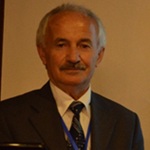
Osman Adiguzel
Firat University, Turkey

Dr Shawn Gouws
Nelson Mandela University, South Africa

Sam Hsien-Yi Hsu
City University of Hong Kong, Hong Kong
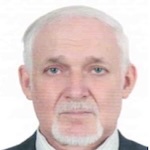
Vladislav Sadykov
Boreskov Institute of Catalysis SB RAS, Russia
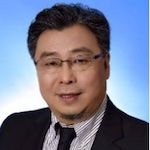
Xinxin Li
Chinese Academy of Sciences, China

Ramin Yousefi
R&D center of BMF Science Group, Germany
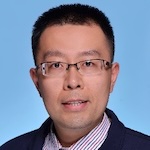
Peng Gao
Chinese Academy of Sciences, China
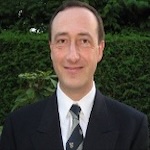
Marco Daturi
UNICAEN, ENSICAEN, CNRS, Laboratoire Catalyse et Spectrochimie, France
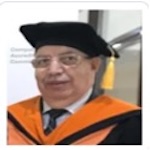
Omar Chaalal
Abu Dhabi University, UAE

Michael Bedzyk
Northwestern University, USA
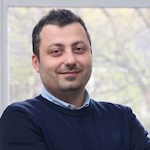
Mostafa Safdari Shadloo
Normandie University, France
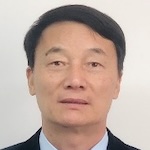
Chuan-Fan Ding
Ningbo University, China
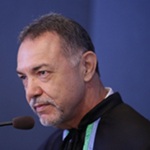
Paulo C. De Morais
Catholic University of Brasilia, Brazil

Prof. Dr.Mohammad Kamil
Lotus Holistic Institute, UAE
Conference Sessions & Tracks
Time Remained for the conference:
Day(s)
:
Hour(s)
:
Minute(s)
:
Second(s)
Catalytic Materials
Catalytic Mechanisms
Nano catalysis
Organocatalysis
Enzymes and Biocatalysts
Photocatalysis
Chemical reaction engineering
Petrochemical Engineering
Thermodynamics
Food Chemistry
Nanomaterials and Nanotechnology
Nuclear Chemistry
Biocatalysis
Fluid dynamics & its Phenomena
Catalysis for Renewable Sources
Catalysis and Zeolites
Catalysis in oil and gas
Analytical Chemistry
Applied Chemistry
Molecular Catalysis
Important Dates & Deadlines
15
January, 2026
First Round of Abstract Submission Deadlines
16
January, 2026
Early Bird Registration Deadlines
16, 17 & 18
July, 2026
Catalysis Summit 2026 will be hosted In-Person at Rome, Italy
Joining as Presenter?
Join the conference in three simple steps !!
Submit Abstract
Wait for acceptance
Proceed for Confirmation
Has your abstract been accepted for the conference? you can now proceed with the registration of the conference.
Join Catalysis Summit 2026 in Rome, Italy
Rome, the capital of Italy, is a city steeped in history and culture, often referred to as the “Eternal City”. With a history spanning over 2,800 years, it was once the heart of the Roman Empire and the cradle of Western civilization and Christianity. Today, it remains a major European political and cultural center and a popular tourist destination, drawing millions of visitors annually.Rome played a pivotal role in the Renaissance and Baroque movements, becoming a center for art, architecture, and intellectual pursuits.
Sponsorship & Exhibition
“We are Open to Sponsorships & Exhibition”. Want to support us financially? or by advertising of your products or services? email us at: info@pagicle.com
Advertising
Conferences give marketers a key opportunity to build relationships and trust with the prospective clients by offering a personal touch that the virtual and digital can often lack. For consumers, advertising is an opportunity to directly engage with companies and get a feel for their individual brand personality.
Pre-Conference Demo Sessions
An optional demo session will be arranged before the conference. A visual demonstration on uses of virtual platform and agenda release.
Let's Meet in Rome
$599
(Per Presenter)
Valid for one Slot including all Taxes
$649
(Per Listener)
Valid for one Slot including all Taxes
$699
(Per Poster)
Valid for one Slot including all Taxes
FAQ’s for Presenters
What is the presentation duration for a Keynote/Oral presenter?
Each Keynote Presenter will have 30-45 minutes, while Oral Presenter will have 20-25 minutes for presentation including a Q/A session
What language should I speak during presentation?
All presenters are requested to present their paper only in English.
Do I get a translator during my presentation?
We do not provide any translators during presentations. However, you can hire your own translator for the presentation.
What is the presentation duration for a poster presenter?
Each Poster Presenter will have 10-15 minutes for presentation including Q/A.
“
We are Open for Exhibitors & Sponsorships.

FAQ
How will I know if my Abstract is accepted?
Once you submit the abstract, we will let you know the acceptance in 24-48 hours. If you have not received the acceptance of abstract, please contact at our program managers.
Can I still present without attending the conference?
Yes, you can participate in Virtual mode without attending the conference In Person.
How/Where to submit an Abstract?
You can submit your Abstract on our website. Fill the requested details and attached your abstract to the form then hit on Proceed for submission button. Make sure to submit your abstract as per the template. Download the template from the submission page.
Do you have any template/format for Abstract?
Yes, we have a template for abstract submission. Please download from the abstract submission page.
Where can I submit my Abstract?
You may submit your abstract online via our Abstract Submission Portal or you can directly email to conference managers.
Can I submit more than one Abstract?
Yes, you can submit more than one abstract and participate in more than one session either in oral or poster session.
List of Catalysis & Chemical Engineering Institutions in Europe
- Delft University of Technology.
- ETH Zurich
4. Technical University of Munich
6. Eindhoven University of Technology
8. Norwegian University of Science and Technology
9. Karlsruhe Institute of Technology
10. Technische Universität Berlin
11.TU Dortmund University12. Technische Universität Bergakademie Freiberg
13. Czech Technical University in Prague
14.University of Groningen
15. Swiss Federal Institute of Technology Lausanne
- European Federation of Catalysis Societies (EFCATS)
Coordinates catalysis research across Europe; organizes the major EUROPACAT conference series.2. European Federation of Catalysis Societies (EFCATS)
Coordinates catalysis research across Europe; organizes the major EUROPACAT conference series.3. European Chemical Society (EuChemS)
Federation representing chemical sciences through advocacy, research support, and education.4. European Chemical Society (EuChemS)
Federation representing chemical sciences through advocacy, research support, and education.5. Federation of European Zeolite Associations (FEZA)
Promotes research on zeolites, porous materials, and catalysis.
6. DECHEMA – Society for Chemical Engineering & Biotechnology
One of Europe’s largest associations for chemical engineering and catalysis; organizer of ACHEMA.7. GeCatS – German Catalysis Society
Leading catalysis association supporting research, networking, and industry cooperation.8. GDCh – German Chemical Society (Catalysis Division)
Supports catalysis, materials chemistry, and reaction engineering research communities.9. SFGP – French Society of Process Engineering
Represents process and chemical engineers across academia and industry.10. SCF – French Chemical Society (Catalysis Group)
Supports catalysis science through meetings, workshops, and research networks.11. IFP Energies Nouvelles Scientific Network
A top French institution advancing catalytic processes and sustainable chemical engineering.12. IChemE – Institution of Chemical Engineers
Global leader in chemical-engineering accreditation, research, and professional standards.13. RSC – Catalysis Science & Technology Group
Division of the Royal Society of Chemistry supporting catalysis research and innovation.14. AIDIC – Italian Association of Chemical Engineering
Promotes chemical-engineering research and organizes major scientific events.15. GIC – Italian Group of Catalysis
National body uniting catalysis researchers in academia and industry.
16. KNCV – Dutch Chemical Society (Catalysis Section)
Supports catalysis research and knowledge exchange within the Netherlands.
17. VirCat – Dutch Association for Catalysis Researchers
Network for early-career researchers in catalysis and reaction engineering.
18. SECAT – Spanish Catalysis Society
One of Europe’s largest catalysis communities; organizes national catalysis conferences.
19. ANQUE – Spanish Association of Chemists & Chemical Engineers
Represents chemical and process engineers in academia and industry.
20. ANQUE – Spanish Association of Chemists & Chemical Engineers
Represents chemical and process engineers in academia and industry.
1. European Federation of Catalysis Societies (EFCATS)
Promotes catalysis research across Europe and organizes the EUROPACAT conference series.
2. European Federation of Chemical Engineering (EFCE)
Represents national chemical-engineering societies; supports conferences, working parties, and industry–academia collaboration.
3. European Chemical Society (EuChemS)
Federation of chemical societies across Europe; supports chemical sciences research and policy.
4. EuChemS Division of Chemical Engineering
Focuses on advancing chemical-engineering science , education, and research collaboration.
5. Federation of European Zeolite Associations (FEZA)
Promotes zeolite, porous materials, and catalytic materials research across European member societies.
6. DECHEMA – Society for Chemical Engineering & Biotechnology
One of Europe’s largest chemical-engineering networks; organizes ACHEMA and numerous catalysis events.
7. GeCatS – German Catalysis Society
National society dedicated to catalysis research, education, and industry engagement.
8. German Chemical Society (GDCh) – Catalysis Division
Supports scientific exchange in catalysis, surface chemistry, and catalytic materials.
9. SFGP – French Society of Process Engineering
Represents chemical and process engineers; focuses on process design, kinetics, and industrial catalysis.
10. SCF – French Chemical Society (Catalysis Group)
Supports molecular, heterogeneous, and industrial catalysis research communities.
11. IFP Energies Nouvelles Scientific Network
A leading French institution advancing catalytic processes, energy transformation, and chemical engineering.
12. IChemE – Institution of Chemical Engineers
One of the world’s leading chemical-engineering professional bodies with strong catalysis-related divisions.
13. Royal Society of Chemistry (RSC) – Catalysis Science & Technology Group
Supports researchers in catalysis science through conferences, publications, and networking.
14. AIDIC – Italian Association of Chemical Engineering
Major Italian chemical-engineering society promoting research, education, and industrial collaboration.
15. GIC – Italian Group of Catalysis
National catalysis society fostering research in homogeneous, heterogeneous, and enzymatic catalysis.
16. KNCV – Dutch Chemical Society (Catalysis Section)
Catalysis division supporting fundamental and applied catalysis research communities.
17. VirCat – Dutch Association for Catalysis Researchers
Network for catalysis PhD students and early-career researchers in the Netherlands.
18. SECAT – Spanish Catalysis Society
One of Europe’s largest national catalysis societies; organizes national catalysis symposiums.
19. ANQUE – Spanish National Association of Chemists & Chemical Engineers
Represents chemical and process engineers; supports industry-oriented engineering activities.
20. Swiss Chemical Society (SCS) – Catalysis Network / NCCR Catalysis
National program promoting sustainable catalysis and chemical transformation research.